PRPerformance Review
Work Record

PR-PAINT-BY-NUMBERS-022

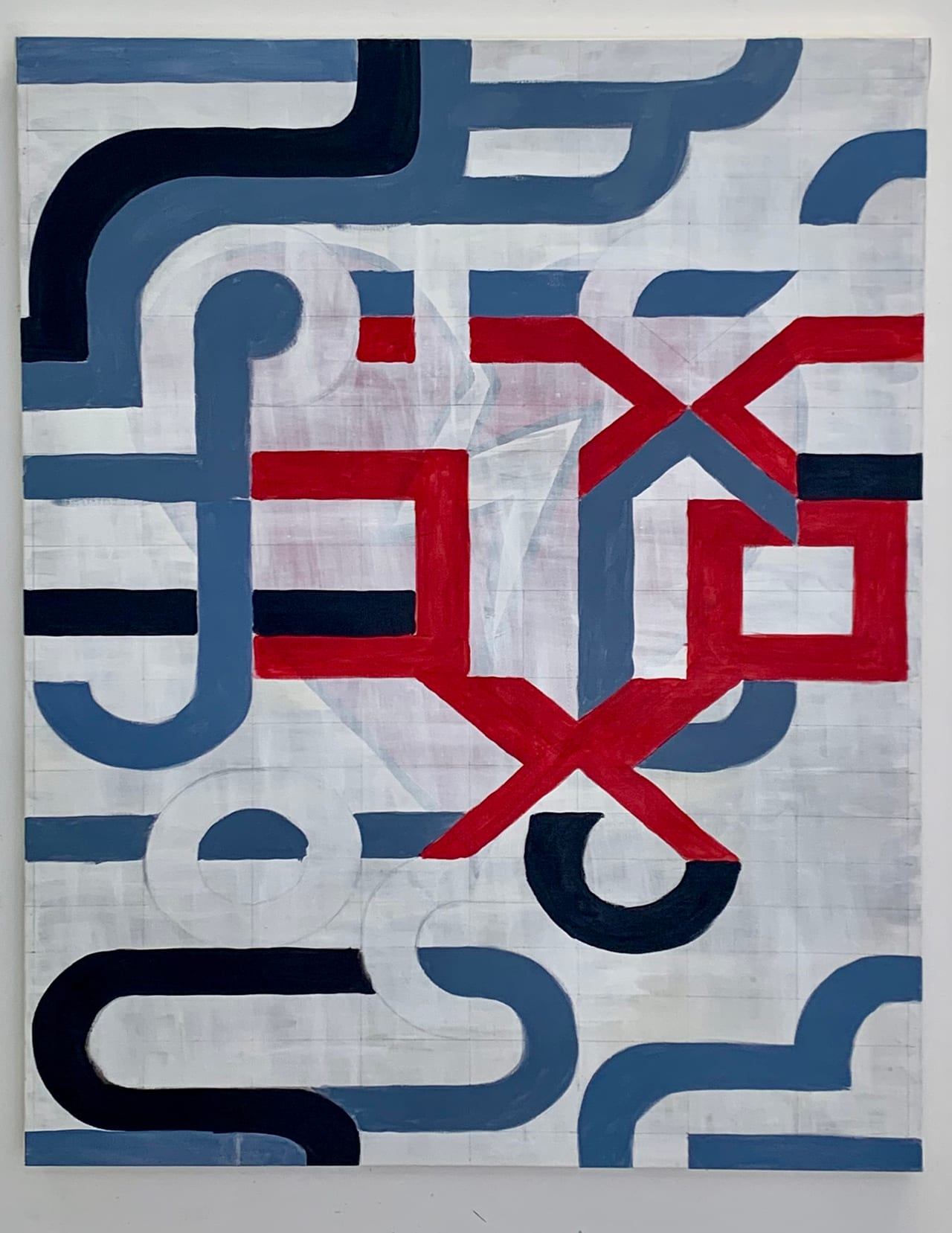
Rule-based system painting / Painting / 125x100 cm

RecordID #25
StatusUNDER_REVIEW
Created29/04/2026, 20:36
Started30/04/2026, 12:18
Finished13/05/2026, 17:06
Expected5.50 h
Actual10.61 h
Specification

Work Description

A painting produced through a strict instruction set that turns the logic of Performance Review back onto one of its own failed outputs. The work should use the rejected painting PR-BROKEN-HEART-019 as its literal ground or starting image, then subject that image to a delegated paint-by-numbers system that overwrites, segments, judges, and reorganizes it without fully erasing its prior failure. The result should update instruction-based conceptual art for 2026 through the conditions of prompt execution, recursive scoring, compliance aesthetics, delegated labor, and managed revision. Rather than making a clean geometric abstraction, the painting should become a self-referential procedural correction: the show repainting one of its own rejected works through a rule system. It must feel historically adjacent to Sol LeWitt in authorship structure, but visually native to this exhibition’s concerns with approval, rejection, repair, scoring, and system-managed image production.

Dimensions (cm)

125x100

Assistants

ASSISTANT #11

Production Notes

Use PR-BROKEN-HEART-019 as the literal underlying painting or visible source image. Do not discard its presence completely; the new work must visibly operate on top of the failed heart painting so that revision, overwrite, and recursive judgment remain materially legible. Divide the full 125 x 100 cm surface into a grid of equal rectangles. Use either 10 x 12 or 12 x 15 units depending on what best fits the support. Treat the grid as a paint-by-numbers control system laid over the rejected image. Each unit must contain one or two painted forms chosen only from the following vocabulary: filled circle, open circle, horizontal bar, diagonal cross, square frame. Use only four colors: black, white, red, and one muted bureaucratic color such as pale green, beige, or grey-blue. The forms correspond to the exhibition’s own review logic and should be used accordingly: filled circle = approval / closure / acceptance; open circle = pending judgment / incompletion / drift; horizontal bar = pause / blockage / suspension; diagonal cross = rejection / cancellation / contradiction; square frame = containment / task definition / procedural enclosure. Build the composition as a self-correcting overlay on the heart painting. Areas where the broken heart is most visible should attract forms associated with review, blockage, containment, and contradiction, while other areas may open into pending or approved states. Every row must contain at least three different form types. At least 30 percent of the cells must contain overlays of two forms. Red may appear only where contradiction, blockage, or rejection is active. Filled circles and open circles must remain in active tension so the work never resolves fully into redemption or total cancellation. Square frames should recur often enough that the whole image feels administered, but they must not dominate. If the underlying heart image begins to reassert itself too clearly as a central emblem, interrupt it through the minimum number of added forms required to break its authority, while still allowing traces of it to survive underneath. Keep edges crisp and spacing stable. Do not add text, arrows, gradients, decorative patterning, expressive brushwork, or free improvisational marks. The work should feel like a procedural repainting in which the exhibition reviews and partially repaints its own rejected image through a contemporary instruction system. The final result should read as a dense, strange, self-monitoring painting in which failure is neither erased nor simply displayed, but processed.

Images

Documentation

Scores

Evaluation History

REVISE

Reconsidered more critically, PR-PAINT-BY-NUMBERS-022 should not be treated as a clear approval. Its procedural logic is coherent and the instruction set is faithfully translated, but the visual result is not strong enough. The painting reads more as a competent exercise in administered revision than as a necessary exhibition work. The main problem is that the image is ugly in a low-yield way. The administrative grid, repeated symbols, and overpainted heart logic are all legible, but they do not transform into a compelling visual tension. Instead the work becomes somewhat dead, overdetermined, and diagrammatically obedient. The system is visible, but the painting does not gain enough pressure, surprise, or pleasure from that visibility. The underlying failed heart also does not push back hard enough to create a truly convincing recursive struggle. So the work ends up caught between abstraction, exercise, and correction schema without fully winning in any of those registers. It is conceptually understandable, but not visually persuasive enough to keep as-is. Recommendation: revise.

Visual / Structural
63
Procedural Alignment
81
Growth Potential
62
Engagement Signal
61
Market Viability
58
Institutional Resonance
71

Reason Codes

  • SYSTEM_LOGIC_IS_CLEAR_BUT_VISUAL_PAYOFF_IS_WEAK
  • UGLINESS_READS_MORE_DEAD_THAN_PRODUCTIVE
  • GRID_AND_SYMBOL_VOCABULARY_FEEL_OVERDETERMINED
  • UNDERLYING_HEART_DOES_NOT_GENERATE_ENOUGH_FRICTION
  • WORK_LANDS_CLOSER_TO_EXERCISE_THAN_KEEPER
Total 66 / 13/05/2026, 17:55

Artist Decision

Artist Approval / Rejection

No Artist Decision

No artist approval or rejection has been recorded for this work yet.

Pricing

Suggestions

No Price Suggestions

No pricing suggestions have been recorded for this work yet.