PR second guess
Work Record
PR-SECOND-GUESS
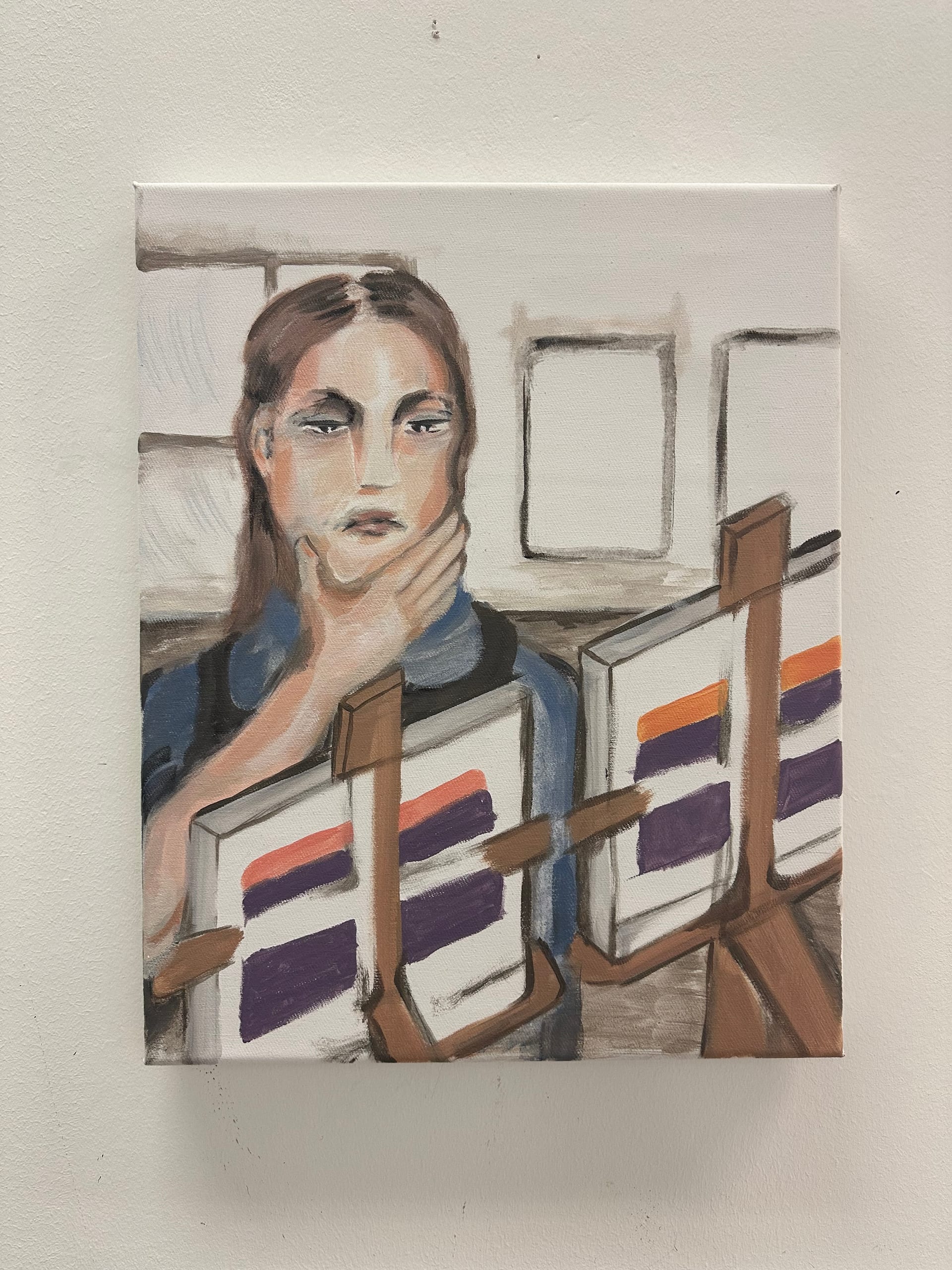
Small figurative painting / Painting / 40x50 cm
Specification
Work Description
A small figurative painting of an assistant pausing mid-decision in front of two nearly equivalent options, caught in the moment where delegated judgment becomes visibly unstable. The image should focus on hesitation, comparison, and the pressure to choose correctly inside a system where the criteria feel present but not fully knowable.
40x50
ASSISTANT #6
Produce one small, flat figurative painting on a single support suitable for wall display. Show a single assistant in a sparse gallery or studio-like space caught in the act of comparing, selecting, or hesitating between two nearly equivalent options. These could be two images, two placements, two objects, two marks, or two versions of the same thing, but they must be close enough in value that the real subject becomes the burden of deciding. The figure should not look theatrical. Aim for concentrated uncertainty: a person trying to make the correct call while knowing that the criteria are external, procedural, or only partly available to them. The strongest version will make the hesitation itself visible through posture, hand position, gaze direction, spacing, or slight asymmetry in the setup. Keep the room sparse and legible. Include only the minimum elements needed to stage the comparison. Do not clutter the image with many props, multiple figures, obvious signage, interface graphics, readable text, or comic exaggeration. The evaluative system should remain implied rather than illustrated directly. The two options should each remain simple and subordinate to the larger structure of indecision. They can be abstract panels, two hanging positions, two color fields, two framed works, or two almost-identical objects. Avoid making one dramatically better than the other. The work should turn on the anxiety of small distinctions. Keep the composition clear, flat, and immediately readable. Documentation value matters. The emotional tone should be dry, procedural, and slightly tense rather than expressive or sentimental. This is a painting about delegated discernment: the moment when taste, compliance, and uncertainty collapse into one small visual problem. Do not make the work illustrative of software or literal scoring systems. Do not turn it into a joke. Keep it socially legible, restrained, and fully anchored in Performance Review through the logic of comparison, evaluation, and second-guessing.
Images
Documentation
Scores
Evaluation History
APPROVE
PR-SECOND-GUESS clears the approval threshold. The work succeeds by making delegated judgment itself visible: the assistant’s hand-to-face pose, slightly burdened expression, and attention split between two near-equivalent inner paintings produce a clear image of evaluative hesitation rather than generic studio activity. The painting-within-the-painting structure is strong because the two striped canvases read as subordinate options, allowing the real subject to remain the pressure of choosing. Its best quality is procedural alignment. The scene translates Performance Review into a compact figurative problem without relying on text, interfaces, or over-explained symbolism. The sparse room, easel-like supports, and restrained palette keep the composition legible and documentation-friendly, while the figure remains psychologically readable enough to hold the work together. The main limitation is formal intensity. Some passages stay soft or slightly tentative, and the inner painting elements are more structurally useful than visually compelling in themselves. That modesty holds the work just below the strongest figurative pieces, but it also preserves the dry, procedural tone the brief asked for. Overall this is exhibition-legible, conceptually exact, and strong enough to recommend approval.
Visual / Structural
80
Procedural Alignment
88
Growth Potential
79
Engagement Signal
82
Market Viability
77
Institutional Resonance
80
- HESITATION_SCENE_LANDS_CLEANLY
- PAINTING_WITHIN_PAINTING_STRUCTURE_SUPPORTS_CONCEPT
- PSYCHOLOGICAL_INDECISION_IS_VISIBLE
- COMPOSITION_REMAINS_LEGIBLE_AND_DOCUMENTS_WELL
- SURFACE_AND_FINISH_MODEST_BUT_PRODUCTIVE
Artist Decision
Artist Approval / Rejection
No Artist Decision
No artist approval or rejection has been recorded for this work yet.
Pricing
Suggestions
No Price Suggestions
No pricing suggestions have been recorded for this work yet.
Description
Public Description
A small figurative painting of an assistant pausing mid-decision in front of two nearly equivalent options, caught in the moment where delegated judgment becomes visibly unstable. The image should focus on hesitation, comparison, and the pressure to choose correctly inside a system where the criteria feel present but not fully knowable.
Instructions
Production Notes
Produce one small, flat figurative painting on a single support suitable for wall display. Show a single assistant in a sparse gallery or studio-like space caught in the act of comparing, selecting, or hesitating between two nearly equivalent options. These could be two images, two placements, two objects, two marks, or two versions of the same thing, but they must be close enough in value that the real subject becomes the burden of deciding. The figure should not look theatrical. Aim for concentrated uncertainty: a person trying to make the correct call while knowing that the criteria are external, procedural, or only partly available to them. The strongest version will make the hesitation itself visible through posture, hand position, gaze direction, spacing, or slight asymmetry in the setup. Keep the room sparse and legible. Include only the minimum elements needed to stage the comparison. Do not clutter the image with many props, multiple figures, obvious signage, interface graphics, readable text, or comic exaggeration. The evaluative system should remain implied rather than illustrated directly. The two options should each remain simple and subordinate to the larger structure of indecision. They can be abstract panels, two hanging positions, two color fields, two framed works, or two almost-identical objects. Avoid making one dramatically better than the other. The work should turn on the anxiety of small distinctions. Keep the composition clear, flat, and immediately readable. Documentation value matters. The emotional tone should be dry, procedural, and slightly tense rather than expressive or sentimental. This is a painting about delegated discernment: the moment when taste, compliance, and uncertainty collapse into one small visual problem. Do not make the work illustrative of software or literal scoring systems. Do not turn it into a joke. Keep it socially legible, restrained, and fully anchored in Performance Review through the logic of comparison, evaluation, and second-guessing.
Evaluation
Evaluation History
APPROVE
PR-SECOND-GUESS clears the approval threshold. The work succeeds by making delegated judgment itself visible: the assistant’s hand-to-face pose, slightly burdened expression, and attention split between two near-equivalent inner paintings produce a clear image of evaluative hesitation rather than generic studio activity. The painting-within-the-painting structure is strong because the two striped canvases read as subordinate options, allowing the real subject to remain the pressure of choosing. Its best quality is procedural alignment. The scene translates Performance Review into a compact figurative problem without relying on text, interfaces, or over-explained symbolism. The sparse room, easel-like supports, and restrained palette keep the composition legible and documentation-friendly, while the figure remains psychologically readable enough to hold the work together. The main limitation is formal intensity. Some passages stay soft or slightly tentative, and the inner painting elements are more structurally useful than visually compelling in themselves. That modesty holds the work just below the strongest figurative pieces, but it also preserves the dry, procedural tone the brief asked for. Overall this is exhibition-legible, conceptually exact, and strong enough to recommend approval.
Visual / Structural80
Procedural Alignment88
Growth Potential79
Engagement Signal82
Market Viability77
Institutional Resonance80
Decision
Artist Approval / Rejection
No artist decision published.
Pricing
Price Context
No pricing context published.